
David Klatt and Zohra Roy
The July 1-4, 2026 heatwave pushed the New York City grid into a severe supply-demand imbalance. On July 1st, real-time electricity prices spiked as high as $2,850/MWh, roughly 50 times the normal price. NYISO and Con Edison responded by dispatching multiple demand response events per day for four straight days, Wednesday through Saturday, including a system-wide dispatch of Con Edison's DLRP emergency program. That dispatch was unprecedented and effectively created an all-day reduction window for some buildings.
Here's what happened, why it mattered, and how the buildings in our SmartKit network responded.
What happened: four straight days of overlapping events
Most buildings don't see four consecutive days of demand response events. Last week, many did. Some buildings had multiple events per day for four days in a row, stacking NYISO SCR, Con Ed DLRP, and Con Ed CSRP windows on top of each other and creating a complex set of incentives to reduce electricity use during key hours from Wednesday through Saturday.
Our SmartKit customers had a reason to reduce electricity use during those key hours each day, across overlapping event types. Success wasn't about hitting 100% of the goal on every single event. It was about prioritizing the hours that mattered most.
Why it mattered: prices spiked 50x normal
Real-time electricity prices in NYC hit $2,850/MWh on July 1st. For comparison, that's roughly 50 times a normal rate. Prices like that don't happen because the grid has room to spare. They happen when supply is stretched thin and every megawatt of reduction counts.
The impact: the gap that made the difference
Comparing New York City's expected electricity usage to its actual usage on July 1st and 2nd, the gap is significant. That gap is demand response at work. It's a direct picture of thousands of building operators and tens of thousands of small energy users shifting electricity usage right when the grid needed it most.
How buildings responded: five connected technologies, one shared outcome
Buildings of all shapes and sizes participated, and they didn't all do it the same way. Five different connected technologies delivered reductions during last week's events, each automating demand response a little differently.
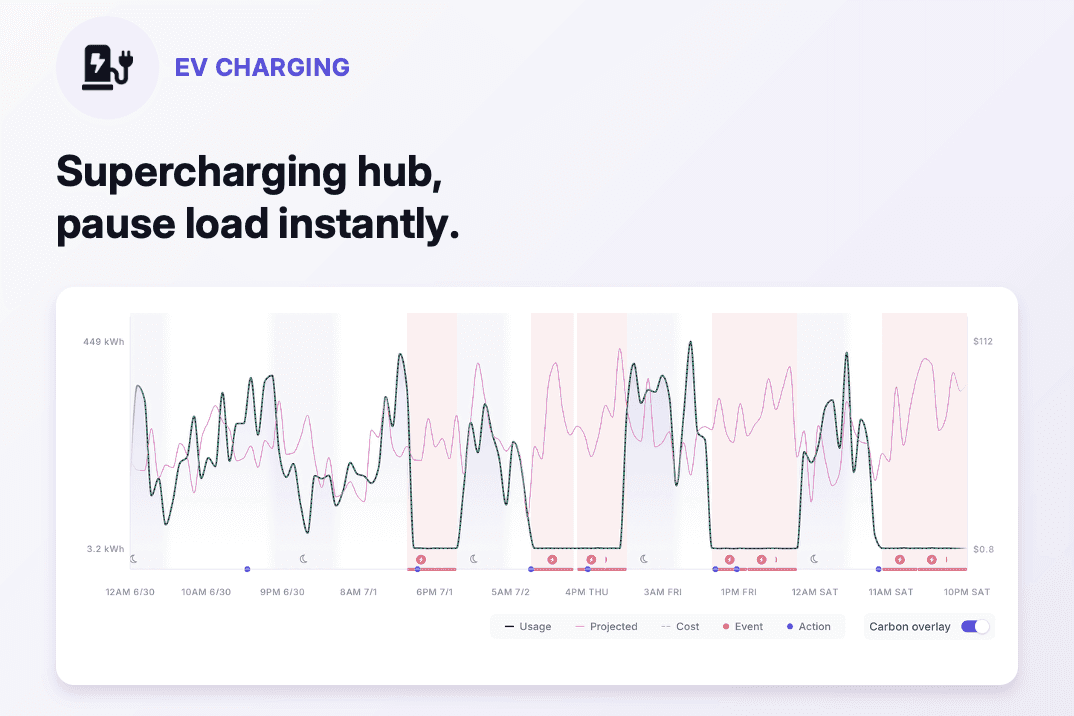
EV charging: pause load instantly. During each dispatch window, electric vehicle charging paused for the duration of the event. Loads for a supercharging hub dropped from the hundreds of kW to near zero, then resumed once the event ended.
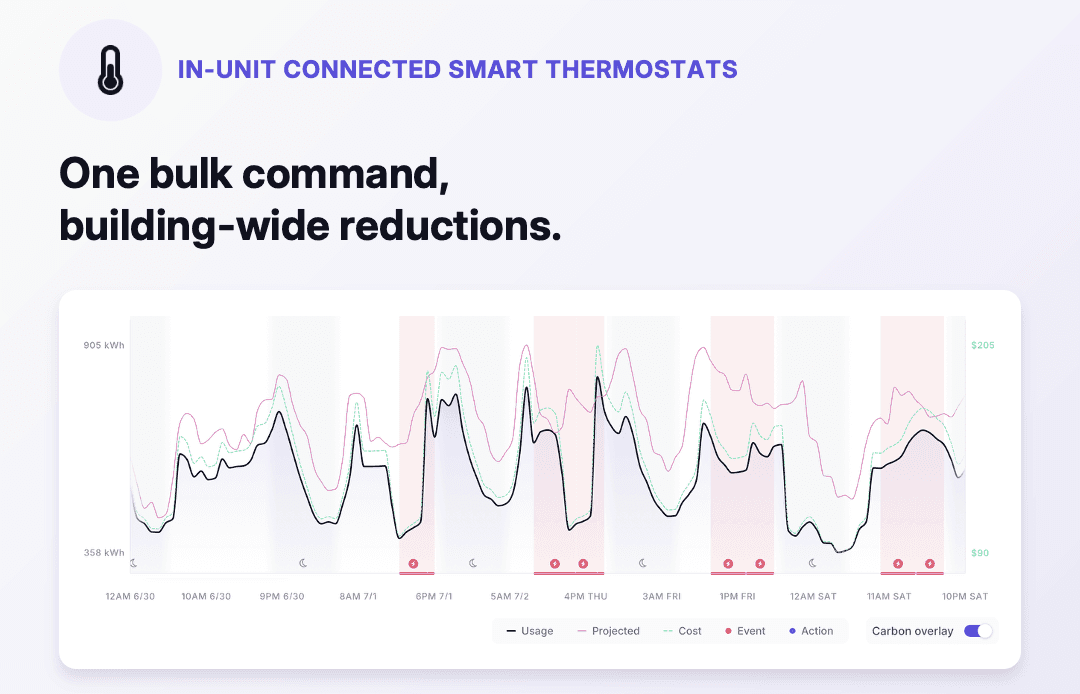
Smart thermostats: one bulk command, building-wide reductions. A single bulk command pre-cooled every connected unit four hours before each event, then reset temperatures after the event concluded. No manual work required, across hundreds of apartments at once.
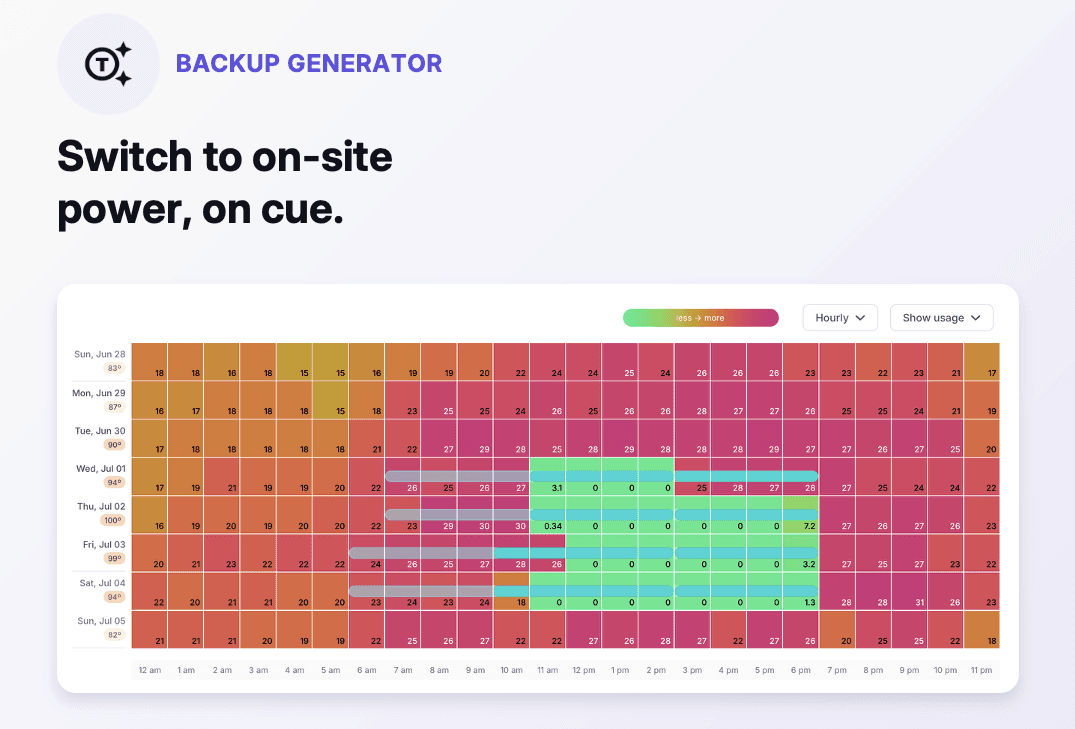
Backup generator: switch to on-site power, on cue. During each event, a building switched onto its own generator and stopped pulling from the grid entirely. Grid draw fell to zero for four consecutive days during the demand response events.
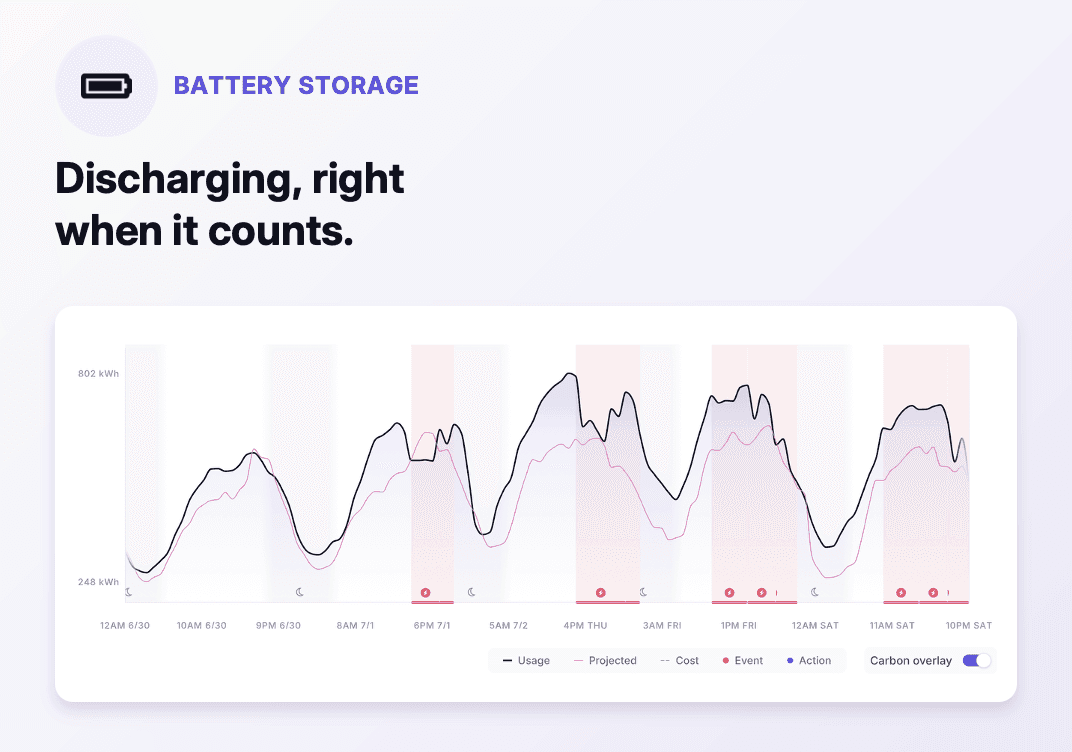
Battery storage: discharging, right when it counts. During each event, on-site battery storage discharged to offset the building's consumption, shifting demand off the grid exactly when it mattered most.
Building automation systems: automated curtailment, maximized earnings. A fully connected building automation system coordinated multiple pieces of equipment simultaneously during a demand response event, rather than relying on manual adjustments from building staff.
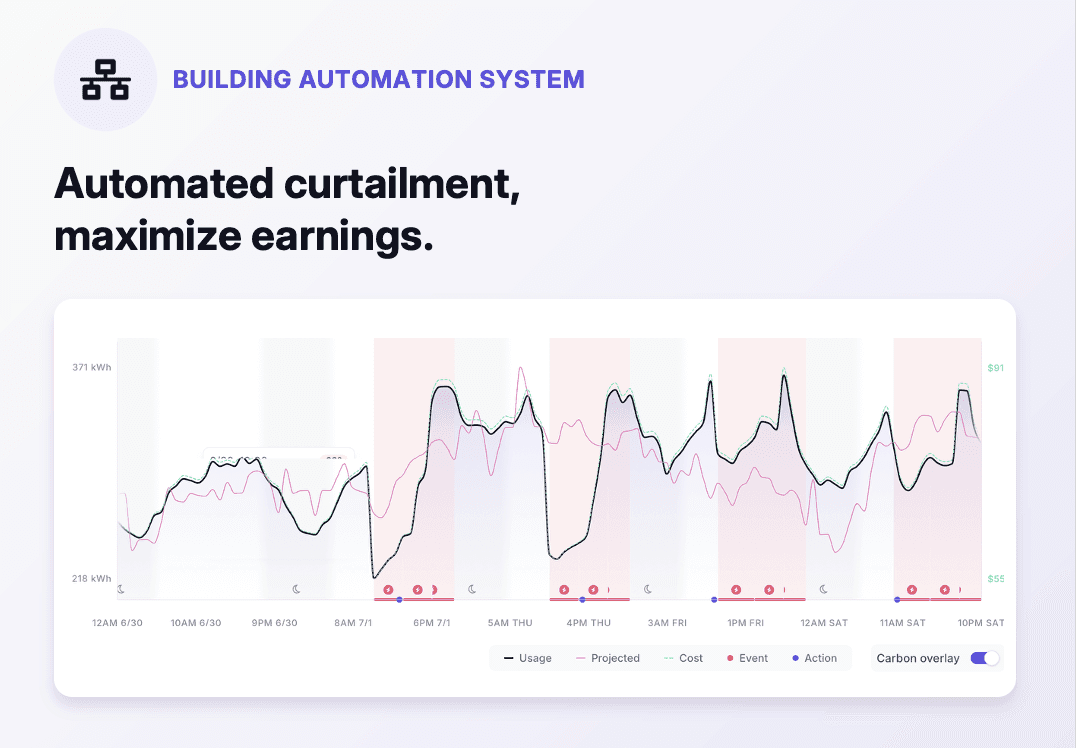
Different technology, same outcome: more reliable, more precise electricity reductions, and buildings earning tens of thousands of dollars for actions they'd already automated.
Thank you to every building operator
Your work helped ease pressure on the grid right when it counted, and earned real revenue for your buildings along the way. Whatever's already in your building, an EV charger, a generator, a battery, smart thermostats, or a building automation system, it's likely a candidate for demand response.
Contact us to learn how your buildings can start earning.